2023FY Climate and Sustainability Action Plan (CSAP3.0) Annual Report
Plan Documents
Alumni
Faculty
Staff
Students
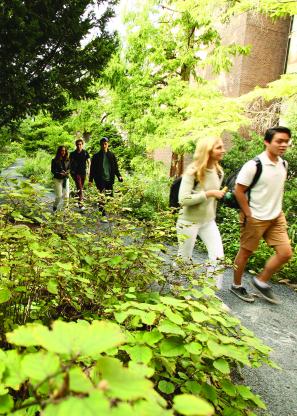
Progress on Penn's Climate and Sustainability Action Plan strategies during FY2023.
For a high resolution PDF suitable for printing, download the 30MB file from Box.
Built Environment
Civic Engagement
Energy & Climate
Food
Natural Environment
Procurement
Recycling & Waste
Transportation
Wellness
2019-24 Climate and Sustainability Action Plan 3.0 (CSAP 3.0)
Plan Documents
Alumni
Faculty
Staff
Students
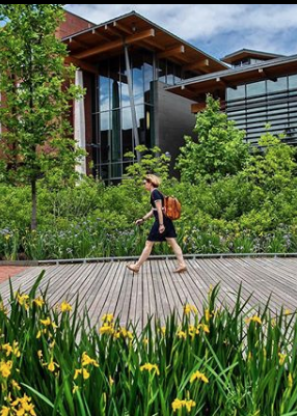
Penn's Climate and Sustainability Action Plan with information on actions to acheive the University's goals for 2019 to 2024.
Built Environment
Civic Engagement
Energy & Climate
Food
Natural Environment
Procurement
Recycling & Waste
Transportation
Wellness
Water Bottle Refill Stations Map
Tours & Maps
Faculty
Staff
Students
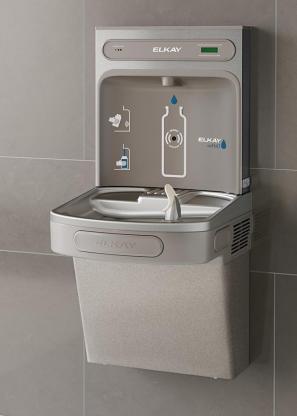
A map to help find free water bottle refilling station anywhere on campus. Penn is committed to reducing single-use plastic waste and promoting healthier hydration habits among students, staff, faculty, and visitors.
Water bottle refill stations are strategically placed throughout campus to ensure convenient access for the entire university community. They can be found in high-traffic areas such as academic buildings, residence halls, libraries, recreational facilities, and common areas. This distribution encourages individuals to refill their water bottles easily instead of purchasing single use plastic water bottles and to stay hydrated throughout the day.
Map
Recycling & Waste
Wellness
Student Eco-Reps
Student Eco-Reps
Built Environment
Civic Engagement
Energy & Climate
Food
Natural Environment
Recycling & Waste
Transportation
Wellness
Students
We are no longer accepting Eco-Rep applications for the 2025-2026 Academic Year. Applications are currently being reviewed and candidates will be contacted soon.
Each year, a cohort of 10-20 Penn sophomores, juniors, and seniors are selected to participate in the Eco-Reps program. Students meet weekly with staff in Penn’s Sustainability Office and work in small teams throughout the year to develop in-depth projects aimed at solving environmental challenges on campus. Initiatives may focus on topics ranging from energy conservation, waste and recycling, water conservation, academic initiatives, local food systems, environmental literacy, and more.
All of Eco-Reps projects involve a strong hands-on component and focus on creating solutions through analyzing the current problem, developing small-scale pilots, and then focusing on broader implementation. Students are asked to bring an entrepreneurial spirit and a sense of willingness and motivation to each project in order to help them succeed.
The Eco-Reps program is organized by Penn’s Sustainability Office within the Division of Facilities and Real Estate Services.
Please reach out to sustainability@upenn.edu with any questions.
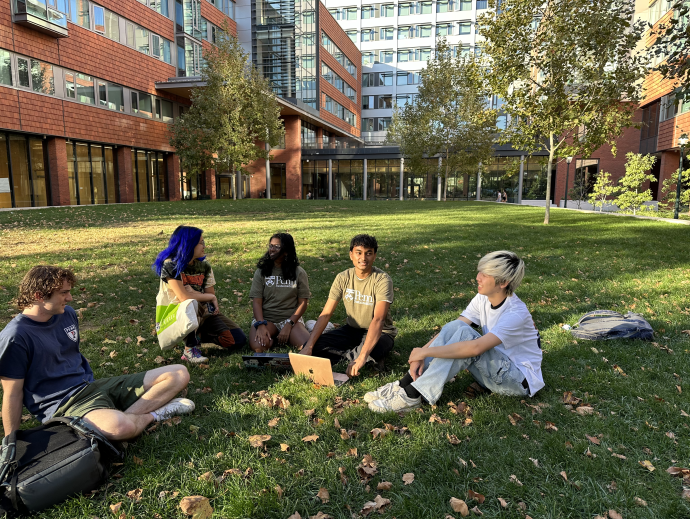
Student Eco-Reps is an environmental leadership program for undergraduate students to implement campus-based sustainability projects.
Purpose
Penn's Student Eco-Reps is an environmental leadership program for undergraduate students interested in advancing sustainability through the implementation of campus-based projects.
Team
Students work as paid employees of Penn’s Sustainability Office and collaborate with our University partners to carry out projects in support of Penn’s Climate and Sustainability Action Plan 4.0.
Impact
Students have completed nearly fifty projects since 2016.
Environmental Sustainability Advisory Committee (ESAC)
Built Environment
Civic Engagement
Energy & Climate
Food
Natural Environment
Procurement
Recycling & Waste
Transportation
Wellness
Faculty
Staff
Students
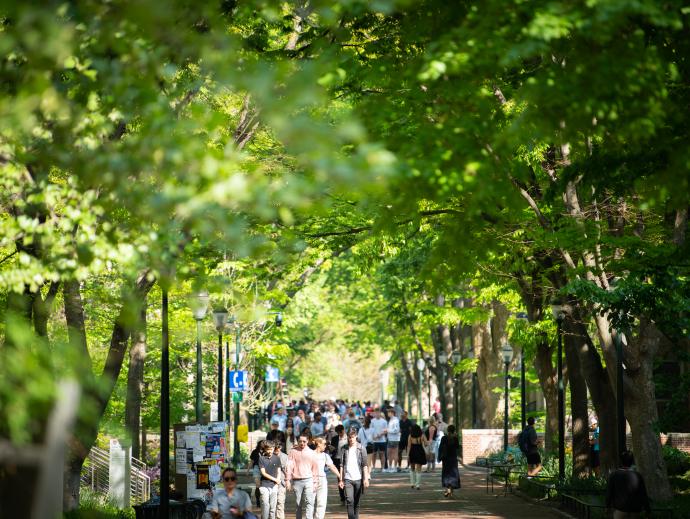
The Environmental Sustainability Advisory Committee is a cross-campus collaboration that includes a representative group of faculty, staff, and students who advise the University on environmental sustainability issues.
Purpose
ESAC subcommittees, each led by two co-chairs, develop recommendations and implement solutions for short- and long-term actions which address Penn's Climate & Sustainability Action Plan 4.0 (CSAP 4.0).
Impact
ESAC has been developing and executing Penn’s climate and sustainability goals since the signing of the Presidents’ Climate Commitment in 2007.
Activities
ESAC subcommittees meet bimonthly to advance the goals of CSAP 4.0, with members then sharing information with their respective schools, centers, or departments.
2018FY Climate Action Plan 2.0 (CAP 2.0) Annual Report

Plan Documents
Alumni
Faculty
Staff
Students
Progress on Penn's Climate Action Plan strategies for 2018.
Built Environment
Civic Engagement
Energy & Climate
Food
Natural Environment
Procurement
Recycling & Waste
Transportation
Wellness