Bird-Friendly Penn

Reducing Bird Strikes

Penn's campus is located along the Atlantic Flyway, making it an important stopover spot for birds during migration. The Bird-Friendly Initiative seeks to reduce bird strikes and building collisions through implementation of bird-friendly building design and campus outreach. 

Reducing Bird Strikes

Penn's campus is located along the Atlantic Flyway, making it an important stopover spot for birds during migration. The Bird-Friendly Initiative seeks to reduce bird strikes and building collisions through implementation of bird-friendly building design and campus outreach. 

Overview

Since 1970, North American bird populations have plummeted by nearly 30% - a particularly alarming figure given that birds are essential for human and environmental health and wellness, providing pest control, pollination, seed propagation, and adding cultural and economic value. In the Fall of 2020 alone, over 1,000 birds were found dead after they flew into buildings and skyscrapers across Philadelphia, in part due to Philadelphia’s central location along the “Atlantic Flyway,” a common migration route for over 500 different species of birds. When these migratory birds encounter the unfamiliar urban landscape, they’re often unable to recognize the see-through and sky-reflecting glass of urban buildings, crashing into them at fatal speeds. These bird deaths are entirely preventable.

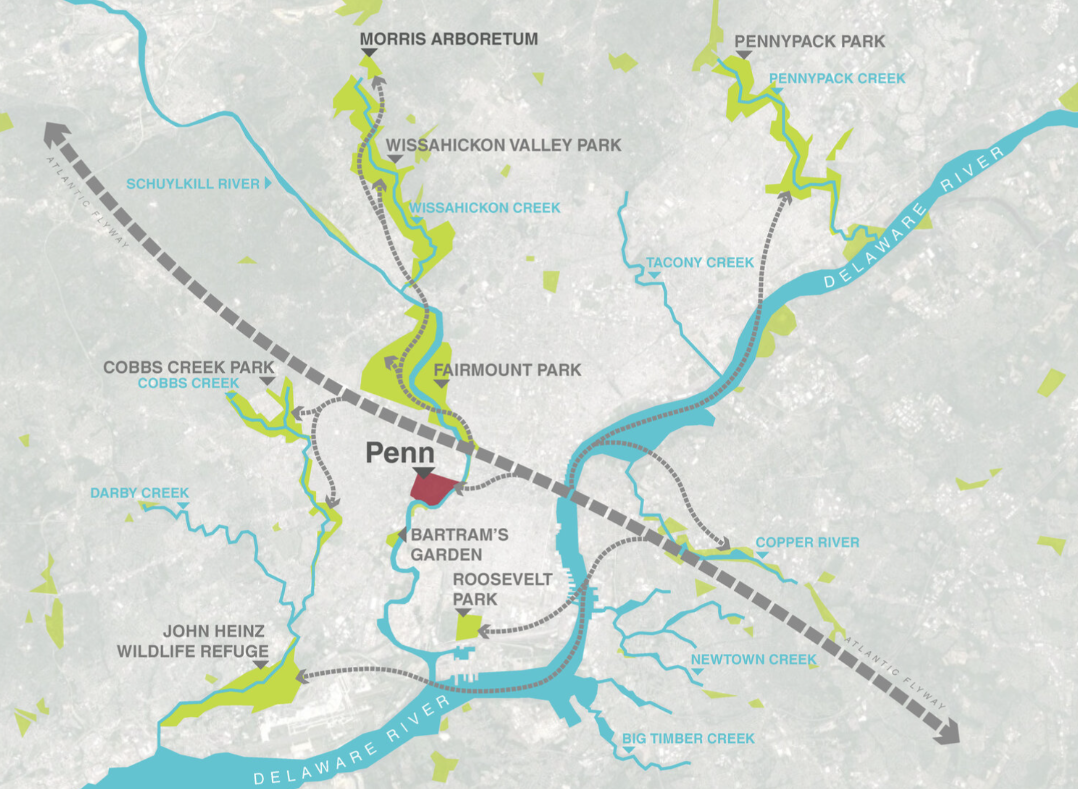
Map of Philadelphia area with markings denoting Penn's campus, the Atlantic Flyway, and other major greenspaces

Map of region along the Atlantic Flyway, highlighting campus, key parks, rivers, and creeks. (ELSP)

Today, members of the Penn student body, faculty, and staff are working together to make Penn’s campus more environmentally conscious by reducing the number of bird strikes as part of Bird-Friendly Penn. This initiative is spearheaded by the FRES Landscape Architecture Group in partnership with Audubon Mid-Atlantic, Bird-Safe Philly, and Penn Sustainability. Ongoing research is being conducted to document the frequency and location of campus bird strikes, and novel solutions to integrate bird-friendly technology into building architecture, such as UV reflective coatings, are being tested. Outreach materials such as a logo, lawn signs, and brochures were created through a partnership between Colleagues in the Stuart Weitzman School of Design.

Spacing: 50px

Get Involved

Students, staff and faculty, and all members of the Penn community are encouraged to become involved in bird-friendly efforts.

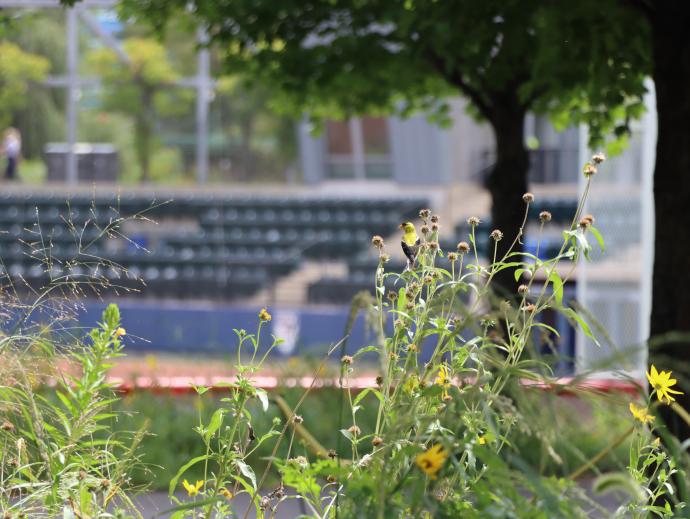
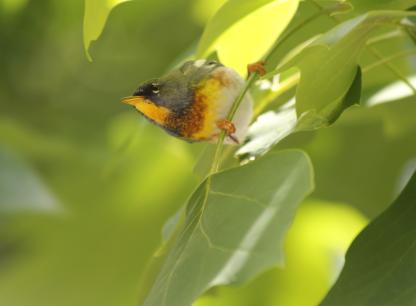
Yellow bird perched on plant in Penn Park
Students | Staff | Faculty

Citizen Science

The Penn Community is active in documenting the frequency and location of bird strikes as well as bird sightings on our campus. Available on Android, iOS, and web browser, iNaturalist is an easy-to-use citizen science application that empowers users to map and observe biodiversity across the world. Collecting this data allows us to better understand campus hotspots and prioritize mitigation efforts.

Report a bird strike

Log a bird sighting

Spacing: 50px
Anchor link: https://www.sustainability.upenn.edu/node/0#resources
Link field url: #resources

Resources

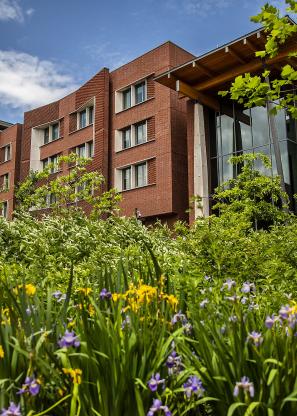
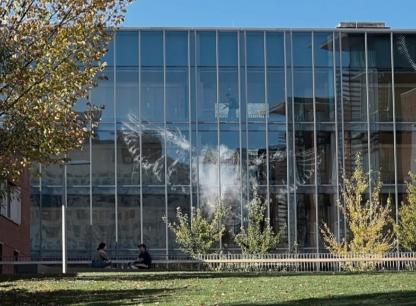
Lauder College House
Guides & Manuals

Bird-Friendly Design Guidelines

Guidance for the evaluation of bird-friendly design strategies in new buildings and applicable renovation projects.

Spacing: 50px
Anchor link: https://www.sustainability.upenn.edu/node/0#buildings
Link field url: #buildings

Buildings

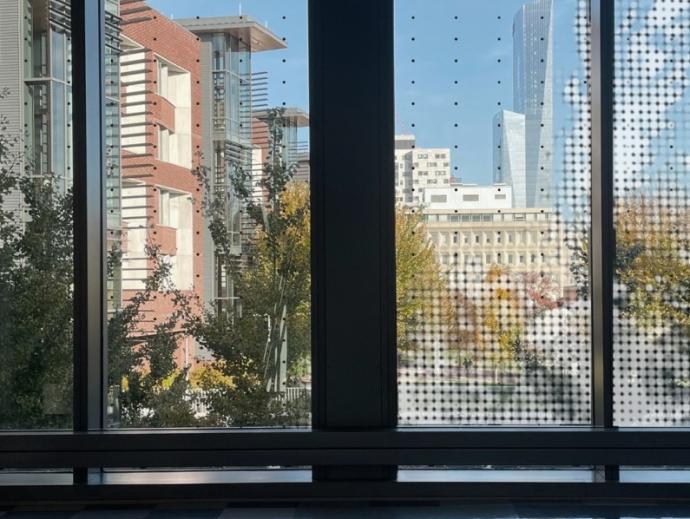
From inside, windows with mock up for exterior window film to reduce bird strikes
Spacing: 50px
Anchor link: https://www.sustainability.upenn.edu/node/0#living-lab
Link field url: #living-lab

Campus as a Living Lab

Our campus operates as a dynamic living lab, blending academic study with hands-on experimentation across fields like sustainability, technology, and urban planning. This immersive approach equips students to tackle real-world challenges, fostering creativity and problem-solving skills essential for addressing complex issues post-graduation. Below are a few examples where students, staff, and faculty, combined this concept of campus as a living lab and bird-friendly initiatives:

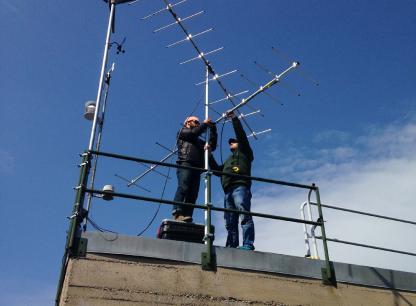
The Motus Wildlife Tracking System, a wildlife tracking technology that emerged in 2014, has the power to fill in the gaps about where, when, how, and why birds migrate, without needing to recapture individual birds. A program of Bird Studies Canada in partnership with collaborating researchers and organizations, Motus consists of an array of antennae installed at a variety of locations, enabling researchers to remotely track birds equipped with ultralight nanotags. The tags “ping” the towers when a bird flies within approximately 15 kilometers (around 9 miles) of an antenna, generating a record that can be accessed by anyone on the Motus website.

In Spring 2018, The Green Fund supported the installation of a Motus station on the roof of David Rittenhouse Laboratory, helping fill in a spatial gap in the detection system, as these stations are primarily installed in more rural areas.

Read more in Penn Today. 


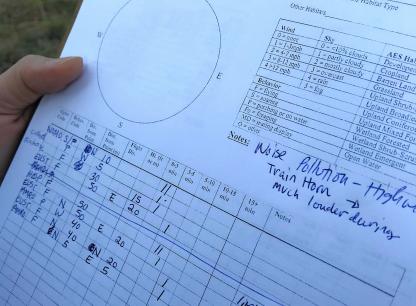
Master of Environmental Studies student, Chloe Cerwinka C'19, conducted research leading a series of bird surveys on campus, acquiring a robust dataset she utilized as the basis of her master’s capstone.

Birds are ubiquitous, intricately connected to habitat, sensitive to environmental changes and their presence can indicate ecosystem function. Situated along a major bird migration route, Penn provides important stop-over habitat for migrating birds and a foraging and nesting habitat for resident birds. Analysis of diversity, abundance, and behavior reveals how the campus landscape provides essential habitat. Point-count surveys and area searches at representative habitat typologies on campus were conducted during migration and breeding seasons in 2018 and 2019. Systematic and incidental data collection resulted in 84 species from 34 families, with a total of 3,777 detections of birds recorded. Enhancing bird-friendly design guidelines and improving campus habitat and management strategies could have a broad impact on landscape connectivity and bird species richness. 

Read more from Penn Today.

Penn's Student Eco-Reps have been instrumental in advancing research and initiatives aimed at mitigating bird collisions on campus. 

In the 2019-20 academic year, Eco-Reps Ryan Lam and Avni Limdi collaborated with Facilities and Real Estate Services (FRES) and the Perelman School of Medicine (PSOM) to meticulously track bird strikes, document species, and pinpoint collision hotspots. Drawing on best practices from other institutions, they also developed impactful messaging to raise awareness about this pressing environmental concern. 

Building on this foundation, in the 2021-22 academic year, Eco-Reps Ennie Akinwunmi, Gabriel Torrebiarte, and Lorraina Rojas utilized Penn's campus as a dynamic living lab to enhance bird habitat within an urban landscape. Their efforts involved monitoring bird strikes and identifying strategic opportunities for outreach initiatives, solidifying Penn's commitment to fostering a bird-friendly environment.

In the 2023-24 academic year, Eco-Reps Zade Dohman, Maddie Pastore, and Alaina Steck built on previous initiatives to further Penn’s commitment to bird-friendly campus design. Their work emphasized educational outreach, including a Lights Out Night Out event, guided bird walks, and continued bird strike monitoring and research. They contributed a white paper proposing architectural solutions like fritting and acid-etched glass, and advocated for practical retrofitting strategies. Despite challenges related to cost and building aesthetics, their efforts supported ongoing momentum toward a safer campus environment for migratory birds. See research poster

The Fall 2022 'Disrupt the Reflection' competition, spearheaded by Bird-Friendly Penn (a collaboration with Penn Facilities & Real Estate Services Landscape Architecture Group and Penn Sustainability) and Stuart Weitzman School of Design, ignited a wave of creativity among Weitzman students, inviting them to tackle the urgent issue of bird collisions on campus. The competition drew attention to the critical role of design in mitigating the risks posed by glass windows to bird species traversing the Atlantic Americas Flyway. These innovative concepts, designs for exterior window film for select buildings in order to reduce fatal collisions (“bird strikes”), ranging from abstract patterns to musical compositions inspired by bird calls, demonstrated a thoughtful approach to not only safeguarding birds but also fostering awareness and connection between humans and the natural world. The competition winners and their designs now stand as testaments to the power of design to disrupt harmful reflections and harmonize our built environment with the needs of wildlife.

‘Disrupt the Reflection’ Competition Winners Announced

Penn Housekeeping staff are often the first people on campus each day, and since many bird-strikes occur around dawn, they are in an ideal position to assist with campus bird-strike monitoring. Every spring and fall migration, Housekeeping staff monitor buildings on campus for bird-window collisions and alert the Penn Bird Strikes team when they find a dead bird. This information gets entered into the iNaturalist Penn Bird Strikes Project website. As monitoring occurs on a grassroots basis, this strategy allows us to increase the amount of data we have about bird-window collisions on campus and determine hot-spots for future mitigation efforts.

The Penn School of Medicine's Johnson Pavilion and the Penn Vet School’s Hill Pavilion have undergone a significant transformation, thanks to a Green Fund project aimed at mitigating bird strikes. Through the strategic retrofitting of glass windows with horizontal lines spaced no more than 4 inches apart vertically, these buildings have become safer environments for migratory birds during the critical spring migration period. The success of this endeavor, which was supported by the Green Fund in spring 2015, underscores Penn's commitment to environmental stewardship and innovation. By proactively addressing the issue of bird collisions, Penn stands at the forefront alongside a select few institutions pioneering solutions in this area. With the initial success of the retrofitting project, attention has now turned to identifying potential sites for future treatments, offering opportunities for further replication or exploration of alternative approaches to enhance bird safety across campus.

Learn more about Penn's Bird-Friendly Buildings.

Spacing: 50px
Anchor link: https://www.sustainability.upenn.edu/node/0#partners
Link field url: #partners

Wellness

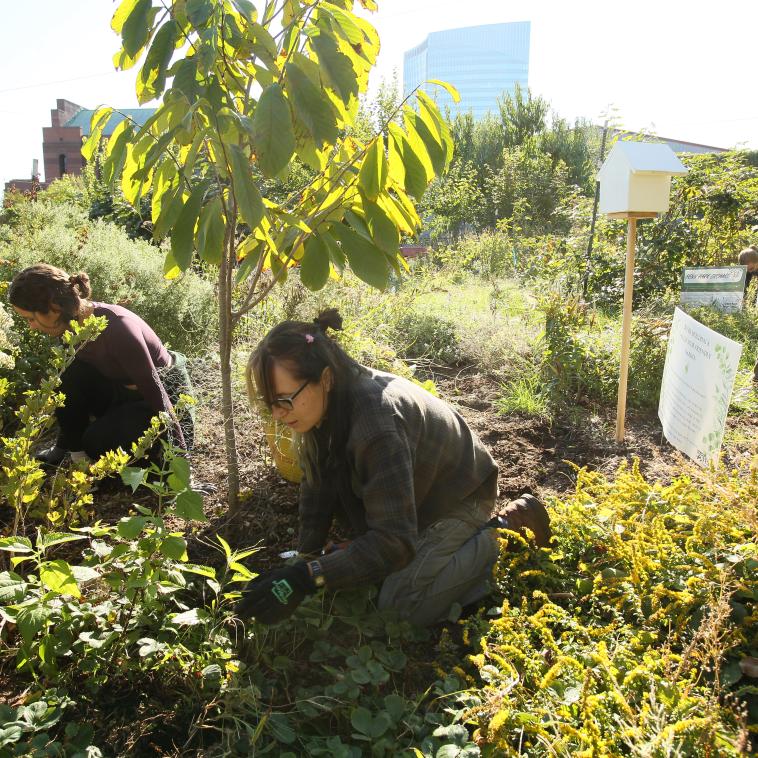
Students gardening in Penn Park Orchard

Penn focuses on promoting inclusive, innovative, and impactful initiatives for campus wellness. Not only are these initiatives for sustainability overall but they also raise the well-being of our communities. Weaved into our university’s fabric, sustainability is as a formal component of the Wellness at Penn Initiative.

Penn Wellness’ vision is to create a campus experience that integrates the science, theory, and practice of wellness. We are accomplishing this by infusing eight domains of Wellness throughout the Penn experience. The domains of Wellness include physical, emotional, social, intellectual, environmental, financial, occupational, and spiritual.

By focusing on wellness holistically, Penn is dedicated to supporting students, staff, and faculty while creating a campus-wide community of care. All wellness initiatives are grounded in collaboration and fueled by CARE: compassion, accessibility, respect, and empowerment. Our team and partners offer a range of opportunities to access support, clinical resources, education, and practical tools to engage with one's health and well-being meaningfully. 
 

Climate & Energy

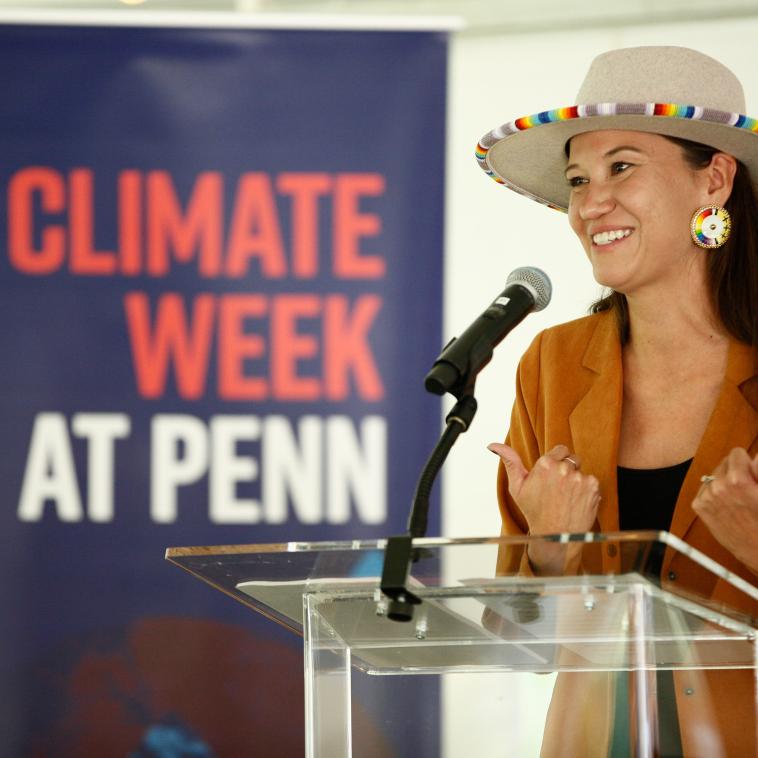
Woman speaks at Climate Week

An ambitious yet achievable climate goal is on the horizon.  Penn is committed to campus carbon neutrality by 2042, a commitment in the CSAP. Campus initiatives to address climate change and energy efficiency put these audacious goals within our reach. Our actions today have real, tangible results for the future. 

Renewable fuel sources and a long-standing focus on energy efficiency make our climate and energy goals attainable. Decarbonizing Penn’s campus isn’t the only benefit of renewable fuel sources. Avoiding energy consumption means we can reallocate funds saved. 

Penn’s successful energy management is due to strategic programs and initiatives, such as optimizing building designs and operations and empowering occupants to minimize energy consumption. Other strategies include the Century Bond Program, building recommissioning, and the Green Labs program.

Procurement

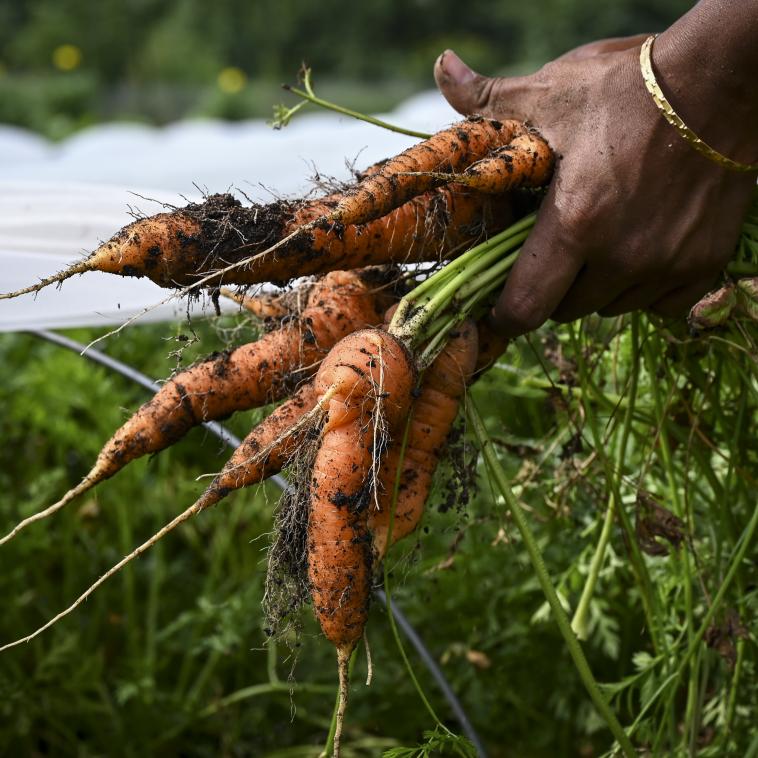
Harvesting carrots

Conscious procurement at Penn ensures the dollars we spend align with our values. All of Penn’s purchasing decisions have environmental and social impacts. We are actively identifying how to ensure Penn’s purchasing decisions consider its local, social, and environmental impacts. With sustainable procurement, we can contribute to an environmentally and socially resilient future.

Penn’s sustainable purchasing practices take a full-circle view of the University’s spending, from building materials and business-travel expenses to campus food. By coordinating our efforts and sharing knowledge, we are able to develop sustainable purchasing policies and procedures.

Penn is an active member of the Sustainable Purchasing Leadership Council. The Council is a non-profit organization whose mission is to support and recognize purchasing leadership that accelerates the transition to a prosperous and sustainable future. 
 

Resources

The collection of resources provided by Penn Sustainability offers policy and guidance documents, research, tools, training materials, scoresheets, recorded webinars, maps, and more, to help you meet your group’s and Penn’s sustainability goals.

Guides & Manuals

A chef sprinkling herbs on a dish
Guides & Manuals

Catering@Penn

A searchable database of food providers based on sustainability factors, cuisine type, service offerings, and geographic location.

People biking to work with helmets on
Guides & Manuals

Resources for Cyclists

A list of resources available for cyclists.

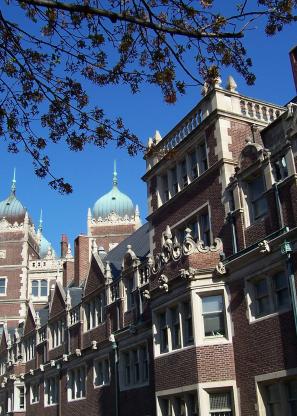
A brick building
Guides & Manuals

Green Guidelines for Renovations

Guidelines to improve environmental practices for building renovation projects across campus.

Spacing: -50px
Spacing: -10px

Tours & Maps

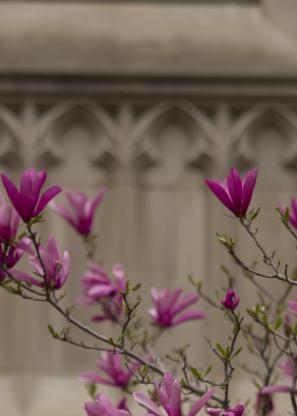
Pink flowers on a tree
Tours & Maps

Plant Explorer Map

An app to locate and learn about plants and other landscape features on campus. 

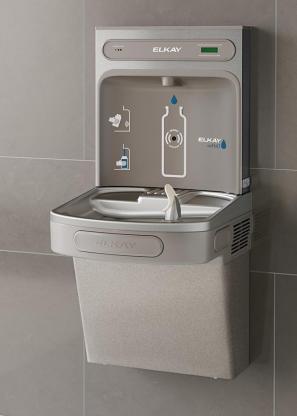
water filler station mounted on wall
Tours & Maps

Water Bottle Refill Stations Map

A map to help find free water bottle refilling station anywhere on campus.

Spacing: -50px
Spacing: -10px

Plan Documents

Spacing: 50px

30x30 Nature Challenge

30x30 Nature Challenge
Civic Engagement
Natural Environment
Wellness
Faculty
Staff
Students

The 30x30 Challenge encourages the Penn community to spend 30 minutes in nature for all 30 days of April.

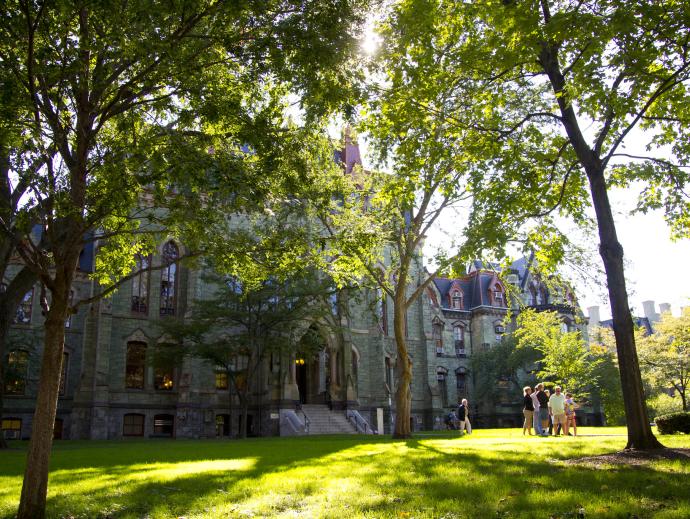
Sun filtering through trees in front of building
Purpose

Over the last decade, researchers have been documenting what many of us know intuitively - that nature is good for our health and well-being. Regularly spending time outdoors can reduce stress and boost immunity, energy levels, and creativity. 

Activites

Challenge yourself to spend at least 30 minutes outdoors in nature each day for all 30 days of April. Eat your lunch outside, go for a walk, or enjoy a local park! 

Connect

Tag us on Instagram (@pennsustainability), Facebook (@PennSustainability) or LinkedIn (Penn Sustainability) and use the hashtags #Penn30x30Challenge in your post to share your pictures of spending time outside. 

Get Involved

Each day during April, Be in the Know participants are challenged to spend at least 30 minutes outside. If you achieve the April 30x30 Outdoor Challenge for 21 out of 30 days and track your progress on the WebMD platform, you will earn 500 points for the 2025-2026 Be in the Know wellness campaign. 

Creating Canopy Tree Giveaway

Creating Canopy
Civic Engagement
Natural Environment
Faculty
Staff

How to Get a Tree

Staff and faculty of the University of Pennsylvania and the University of Pennsylvania Health System are invited to register for a free tree two weeks before the annual giveaway event. Trees will be available to reserve on a first-come, first-served basis only through our online registration system. As part of our support of the City of Philadelphia’s Philly Tree Plan, priority registration is given to Philadelphia residents. Learn what trees are available to select. 

  • Priority Registration will begin on Monday, April 20, 2026, at 10AM for Penn and UPHS staff and faculty that are City of Philadelphia residents.
  • Open Registration will begin on April 30, 2026, at 10AM for all Penn and UPHS staff and faculty.

Limit one tree per household. Addresses, zip codes, and registration times will be verified.

Those who successfully register will be responsible for picking their tree up from Penn’s campus during the event and transporting it home. Find more details in the FAQs.

Picking Up the Tree

When you register, you will select a time to pick up your tree. In order to keep traffic moving, please arrive during your chosen time slot. The tree pick up event will be on Thursday, May 7, 2026, at 3-6 p.m. at the Penn Park Parking Lot (3100 Lower Walnut Street, Philadelphia, PA 19104). Many GPS systems to do not recognize "Lower Walnut Street", so please familiarize yourself with our campus map.

The responsibility is yours to get your new tree home. Bring your car, or arrange a ride. Some past tree recipients have made creative use of wagons or hand trucks to transport their trees.

The young trees that you pick up will vary in size. Some trees are 2FT tall, while others are 9FT. Make sure your tree will fit in your vehicle. You may wish to bring a plastic tarp or blanket to protect your car from moisture and soil.

Directions: Travel East on Chestnut Street to the intersection of Chestnut and S. 31st Street. Turn right on to South 31st Street. Drive to the end of South 31st Street and bear left into the Penn Park Parking Lot. The Creating Canopy Tree Giveaway is located on the far east side of the parking lot.


Sharing Your Tree Story


Creating Canopy has given away over 2,500 trees since it began in 2011. We would love to hear your stories to help us share the impact and encourage further greening.

Creating Canopy is an annual yard tree giveaway for University and UPHS employees. The event is a partnership between Penn, Tree Philly, and Morris Arboretum.


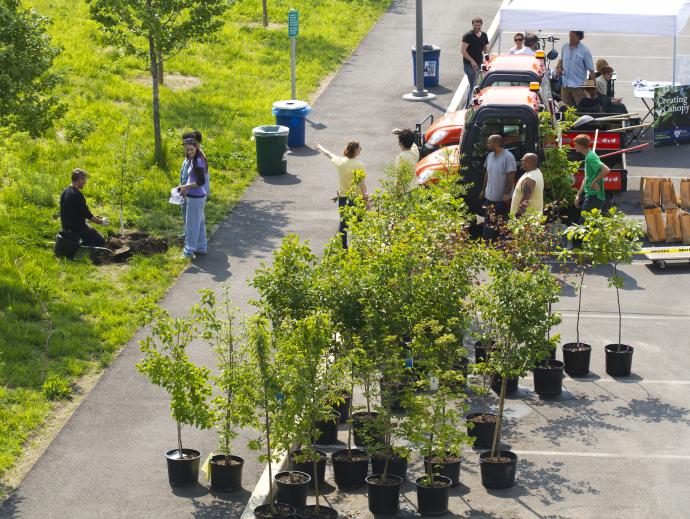
People giving away trees in a parking lot
Purpose

Penn supports urban greening, especially in the greater Philadelphia region, by providing free trees to University of Pennsylvania and the University of Pennsylvania Health System staff and faculty.

Team

The University partners with TreePhilly, a program of Philadelphia Parks & Recreation, for the Creating Canopy tree giveaway. 

Impact

Since the first Creating Canopy in 2011, Penn has distributed over 2,500 trees.

Flyer

Print this flyer and post it in the break room or other common spaces. 

Green Living Survey

Green Living Certification
Civic Engagement
Students

Instructions

  1. Complete the 5-minute Green Living Survey. You will answer questions about your living habits as they relate to sustainability and environmental impact. Each question is worth 1 point.
  2. Completing the survey enters you into monthly raffles to win reusable prizes. Prizes include reusable tote bags, water bottles, metal straws and more. You will be notified via email if you win a raffle.
  3. Review the Green Living Guide and adopt new habits to increase your score next year! 

The 5-minute Green Living Survey shares tips for green living at Penn and enters respondents into monthly raffles for sustainable prizes. 

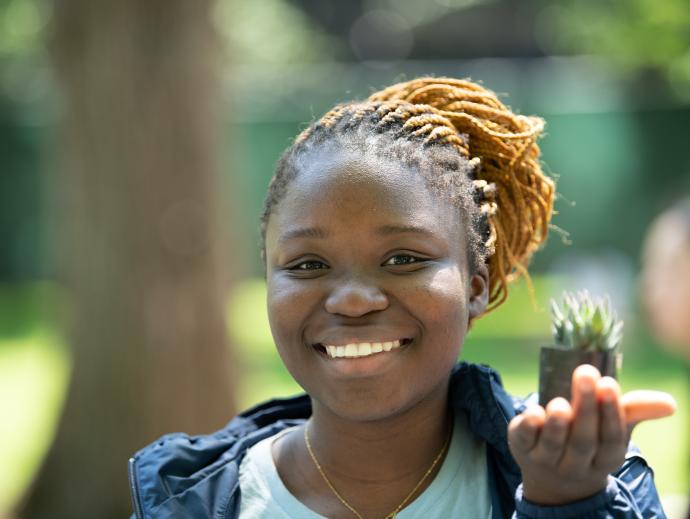
Student holding a plant and smiling
Purpose

Green Living Survey provides a quick overview of ways to make sustainable choices at Penn across eight different categories. Respondents learn new facts and tips and can take the survey once/year to compare their scores overtime. 

Eligibility

The Green Living Survey is open to all currently enrolled undergraduate and graduate students living on and off campus. Students can take once per year. 

Rewards

Taking the survey enters you into monthly raffles for fun, reusable prizes. 

Green Office Certification

Green Office
Built Environment
Civic Engagement
Procurement
Recycling & Waste
Faculty
Staff

How to Get Green Office Certified

  1. Complete the Green Office Certification Checklist by marking all actions applicable to your office. The checklist with automatically calculate your score.  
  2. Have at least 50% of your office sign the Green Office Certification Application Form. The application also requires a signature from your office head or program director.
  3. Submit your completed Checklist and Form by emailing them to sustainability@upenn.edu. Please include "green office certification - [Office Name]" in the subject line.
  4. Staff at Penn Sustainability will review the application. Offices will receive an e-certificate for the level achieved which can be printed and displayed publicly in your office. Your office will also be recognized here as a Certified Green Office.
  5. Certification is valid for 3 years from the date of the award. To recertify, an office must submit a new application for certification. 

The Green Office Certification recognizes the efforts of staff and faculty to green their daily activities by offering four levels of certification.

An office desk
Purpose

Offices represent a significant portion of Penn’s energy and material use and waste production. The Penn Sustainability Office recognizes the efforts of staff and faculty to green their daily activities by offering four levels of Green Office certification.

Activities

Certified offices report on existing activities, and implement new activities, across 7 categories: Waste, Purchasing, Energy, Water, Indoor Air Quality and Human Health, Transportation and Involvement. The more actions you implement, the higher certification level you can achieve. 

Impact

Since inception of the program, nearly 200 offices across Penn have been Green Office Certified.

PennGreen

Civic Engagement
Students

Overview

PennGreen is a Pre-Orientation Program for incoming students sponsored by Penn Sustainability and the Undergraduate Assembly

Penn fosters a robust culture of environmental sustainability, with numerous student organizations, leadership opportunities, research avenues, and courses dedicated to sustainability. Moreover, nestled within Philadelphia, Penn enjoys a distinctive setting for environmentalism and sustainability initiatives. PennGreen immerses incoming students in the vibrant eco-culture of both Penn and Philadelphia.

Joining PennGreen means connecting with like-minded peers, discovering local green spaces, exploring sustainable food networks, learning about academic and extracurricular pathways in sustainability, and engaging in community-building activities. A highlight of the program is an overnight camping trip. If you’re looking to form meaningful connections with other incoming students and develop as a sustainability leader, this program is for you!

Apply

Every year, the number of applications we receive exceeds the available spaces in the program. Participants are selected through a thorough review process conducted by program staff and student leaders. Those selected will be required to promptly complete registration forms and submit payment. Students are welcome to apply to other pre-orientation programs and make their final decision based on their acceptance status. 

Applications for PennGreen open annually to incoming and transfer students through this link. The 2026 application period opens May 11, 2026 and closes June 9, 2026, at 11:59 pm ET. Application decisions will be available in the application portal in late June 2026. 

Program cost:

Program tuition is $425. Financial assistance is available to eligible students who qualify for financial aid. The program fee is inclusive of early move-in privileges, meals, transportation, and activity fees. 

If you have questions, please contact Penn Sustainability at sustainability@upenn.edu.

A Pre-Orientation Program for incoming students that provides opportunities to engage with sustainability. 

Many students smiling at camera in a field
Purpose

Our Pre-Orientation Program for new, incoming students dedicated to exploring sustainability and environmentalism at Penn and throughout Philadelphia.

Program Dates

Saturday, August 15th through Wednesday, August 19th.

Application Period

The 2026 application period is Monday, May 11, 2026 at 12:00AM ET through Tuesday, June 9, 2026 at 11:59PM ET. The application is found on this link and will open in May 2026. 

Activities

Programming is centered on spotlighting environmental and sustainability-oriented adventures, initiatives, and opportunities. Participants will discover the rich eco-culture both on campus and throughout Philadelphia. If you’re looking to form meaningful connections with other incoming students and develop as a sustainability leader, this program is for you!

Team

PennGreen is guided and orchestrated by upperclass students who either have participated in PennGreen or hold leadership positions in campus sustainability organizations.